


They also serve as proof of investment, representing the amount of money paid into the company. Understanding the distinction between these two is vital for assessing a company’s financial strategies and shareholder value. While treasury shares can be reissued or retired depending on the company’s strategic needs, they can also signal management’s belief in the company’s future performance. Floating shares are calculated by subtracting outstanding and restricted shares from the total number of shares.
Australiansuper Balanced Fund Performance Compared to Peers

These platforms offer user-friendly interfaces for quick access to financial metrics and improved site navigation, allowing users to efficiently find what they need. It provides direct access to company filings like 10-Ks and 10-Qs, which contain verified, comprehensive details about shares outstanding. Utilizing these resources correctly can enhance site usage, ensuring users make the most of the information provided. Shares outstanding include those held by institutional investors and company insiders, while floating shares refer to those available for trading. Investors can distinguish between authorized shares and outstanding shares, which represent the number of shares the investors currently hold.

How to Calculate Shares Outstanding: A Step-by-Step Guide
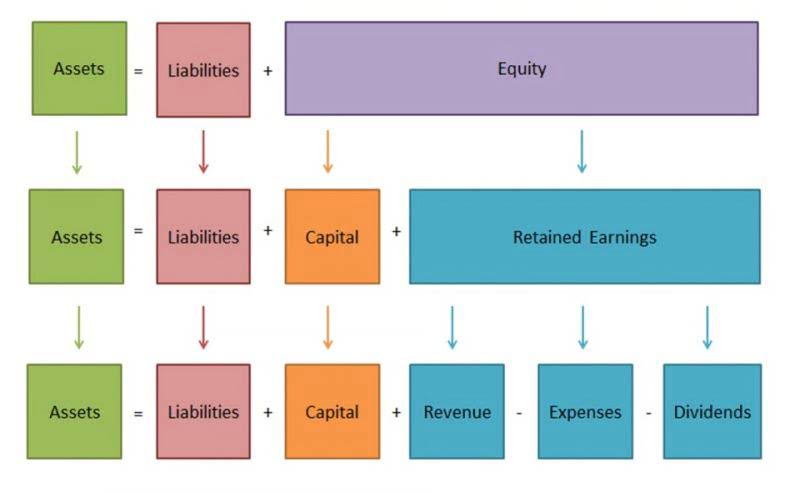
Equity is how to find number of shares outstanding on balance sheet the total value of a company’s assets minus its liabilities, which is essentially the amount of money that would be left over for the shareholders if the company were to be liquidated. Common shares on a balance sheet and equity are closely related, but they’re not the same thing. Diluted shares reflect the possible dilution of a company’s shares due to the availability of stock options, warrants, convertible bonds, and other convertible securities. These shares can be bought and sold at any time, making them a dynamic and fluid part of a company’s capital structure.
Calculating and Determining Equity

For example, if the par value is $1 and the company has issued 100,000 shares, the common stock value is $100,000. To calculate common stock, start by determining the total equity of the company, which can be either owner’s equity or stockholder’s equity. Additional paid-in capital represents the excess amount paid by investors over the nominal price of the common stock. Common stock is a type of security that represents an ownership position, or equity, in a company. When you buy a share of common stock, you are buying a part of that business.
- The formula to find common stock value is Total Equity – Preferred Stock – Retained Earnings.
- If you’re interested in learning about common stock, you may also in learning about the best broker available for your needs, so visit our broker center to discover the possibilities.
- Examples of dilutive contracts include stock convertible securities, employee stock options and restricted stock units (RSUs).
- Once you locate the line item for preferred stock, take note of the total number of preferred shares outstanding.
- In addition, the notes accompanying financial statements often detail shares issued and treasury shares, helping you calculate outstanding shares precisely.
Additional Questions & Answers
- At the time, GE discussed plans to split into three companies and to divest from many businesses.
- Common stock outstanding refers to the sum of all shares that a company’s insiders and its investors own.
- Stock issued below par value is a rare occurrence, but if it happens, it’s reported as a deduction in stockholder’s equity, as shown in the example where $1 par stock was issued at $0.50.
- You’ll also see the various other stock categories, so don’t let that confuse you.
- Let’s see some simple to advanced examples of issuance of common stock calculation to understand it better.
- A company’s outstanding shares may be less than or equal to issued shares.
This number is crucial as it reflects the company’s total equity ownership available to investors. The importance of shares outstanding lies in their influence on key financial metrics like earnings per share (EPS) and market capitalization. EPS is calculated by dividing the company’s net earnings by the number how is sales tax calculated of shares outstanding, providing a measure of a company’s profitability on a per-share basis. Similarly, market capitalization is derived by multiplying shares outstanding by the current market price per share, indicating the overall market value of the company. Different share types, such as class B shares, can also influence a company’s strategic decisions and control dynamics. Understanding these shares aids greatly in evaluating a company’s financial health and investment potential.
- The number of common shares outstanding is a key metric that investors and analysts use to evaluate a company’s financial health and potential for growth.
- Preferred stock shareholders have to be paid in full before common stock shareholders can enjoy the benefit from a company’s earnings or assets.
- The primary distinction between preferred and common stock is that common stock grants stockholders voting rights, while preferred stock does not.
- This reduces the number of shares outstanding, which in turn increases the reported earnings per share, while increasing the ownership percentage for the remaining shareholders.
- As we’ve already seen, the number of a company’s outstanding shares can vary over time, sometimes fluctuating a great deal.
The number of authorized shares can be substantially greater than the number of shares outstanding since authorized shares represent the maximum possible number of shares a company can issue. The outstanding number of shares may be either equal to or less than the number of authorized shares. For example, a How to Invoice as a Freelancer company might authorize 10 million shares to be created for its IPO, but end up actually only issuing nine million of the shares. The number of shares outstanding consists of shares held by institutions, restricted shares held by company insiders, and shares available for investors to buy and sell on the open market. Here, the balance sheet reports 8,019 million shares issued and 3,901 million treasury shares, as of September 30, 2022. Knowing a company’s number of shares outstanding is key when calculating critical financial metrics and determining share value as a portion of ownership.
